
Drew County Arrest Warrants Explained
An arrest warrant is a written order to take a person into custody. In Drew County, the process starts with a complaint, information, indictment, or sworn affidavit from an investigation or a prosecutor. A judicial officer then reads the sworn facts and decides whether probable cause exists. The court you contact matters. Drew County Circuit Court, part of the Tenth Judicial Circuit, handles serious felonies. The 28th State District Court handles misdemeanors, traffic and ordinance matters, and preliminary felony proceedings, and its judge can issue warrants within that authority. Each clerk keeps the case file, controls access to public filings, and explains the judicial steps that follow service. The official Drew district-court profile names the local court and gives the contact path for misdemeanor and preliminary matters.
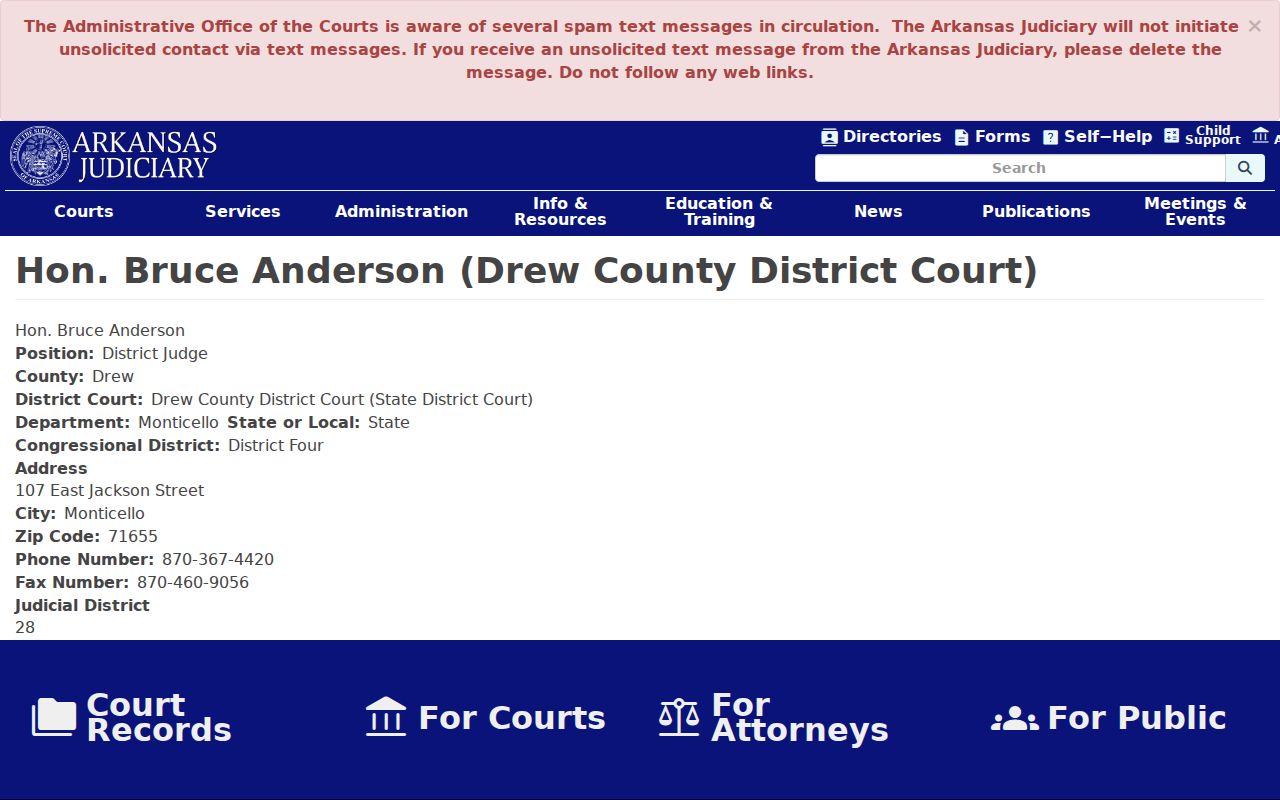
That profile keeps lower-level cases routed correctly. It also keeps the district judge distinct from the Drew County circuit bench that hears felonies.
Drew County Arrest Warrants Under Rule 7.2
Arkansas Rule of Criminal Procedure 7.2 spells out what a warrant must contain. It is written in the name of Arkansas. It goes to law-enforcement officers. The issuing official signs and dates it, and it names the accused or gives a reliable description. It also states the offense and county, rides with the complaint, information, affidavit, or other supporting material, and commands arrest and appearance under stated release terms. Those requirements explain why a solid Drew County arrest warrant record carries more than a name. The issuing court, the offense, the issue date, the supporting filing, and the bond or release terms separate one record from the next. A thin third-party result missing those fields should not be trusted. Pull the official docket, and ask the court whether anything later changed the warrant's status.
Inside a Drew County Arrest Warrant
A public file can pair the warrant itself with docket entries from the criminal case. Expect the defendant's name, the issuing judge or magistrate, the court, the offense, the statute and its classification, the issue date, and the county. The return portion names the serving agency and the date of service. A first appearance or bond event may come next. Supporting affidavits usually become public after return under Rule 7.3, unless the judge closes or seals them for good cause.
| Warrant or case number | court-assigned identifier used to trace the file |
|---|---|
| Accused and offense | Name or description, alleged charge, level, and statute |
| Judicial action | Issuing official, date, probable-cause support, and release terms |
| Service and status | Agency, return, served event, bond, first appearance, or later order |
Juvenile cases and sealed material stay restricted in Drew County. A missing affidavit or a blank search result can mean a lawful access limit, not that no warrant exists.
Drew County Arrest Warrant Review
The Drew County Sheriff's Criminal Investigation Division description says a detective prepares warrants and builds case files. Preparation is not issuance. Only a judicial officer reviewing sworn probable-cause material can authorize the arrest command.
The path is investigation → sworn filing → judicial probable-cause review → warrant issuance → entry in court and law-enforcement systems → service and return. Search ARCourts may show the public court side of that chain. ACIC and NCIC wanted-person data are restricted criminal-justice systems and are not public statewide warrant-search portals. That difference is why a public docket search should be followed by a call to the Drew County Circuit Clerk, District Court, or Sheriff’s Office according to the case.
Serving Arrest Warrants in Drew County
A warrant is directed to authorized law-enforcement officers. The Drew County Sheriff's Office may serve county warrants. Monticello Police can act within its own authority. Arkansas State Police or another agency can serve an entered warrant during lawful contact. The serving agency then files or transmits the return. So "warrant issued" and "warrant served" are different events, and a returned warrant does not end the criminal charge. The official Drew County jail description says arrested people go to the Detention Center for booking and incarceration. The sheriff posts no guaranteed walk-in surrender procedure, bond-window schedule, or accepted payment method. Call the sheriff at (870) 367-6211 and the issuing court before assuming anything about booking or release.
Drew County Arrest Warrant Clerk Records
The Drew County Circuit Clerk holds the criminal case files for Drew County Circuit Court, plus civil, domestic-relations, juvenile, and related circuit records. For a felony arrest warrant or any later circuit proceeding, call (870) 460-6250 or visit 210 S. Main Street, Monticello. Ask for the latest public docket status, the division holding the case, and any appearance, bond, or filing instructions. The official Circuit Clerk page gives the current contact route and helps you tell the Circuit Clerk from the County Clerk, whose duties cover county, probate, and quorum-court records rather than the criminal docket. For the state district court, the Arkansas Judiciary judge and chief-clerk directory names the sitting officials in Drew County.
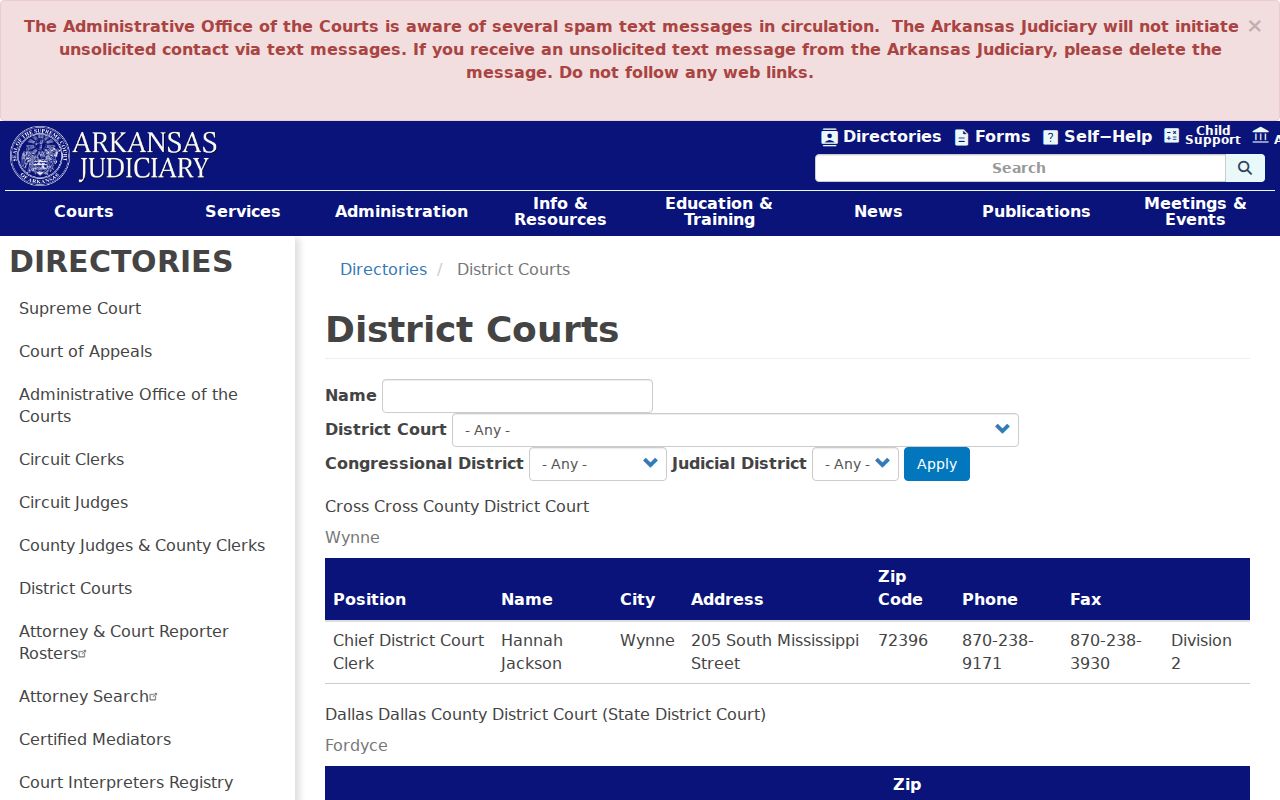
Check that directory first. It verifies the officials behind any Drew County arrest-warrant instructions or contact details you plan to rely on.
Comparing Arrest, Summons, and Bench Warrants
Three commands, three starting points. A criminal summons orders a person to appear rather than to be arrested on the spot. A bench warrant usually follows a failure to appear or noncompliance in a case already open in Drew County. An arrest warrant rests on probable cause for an alleged offense. Docket language can blur these differences, so read the entry carefully.
| Process | Basis | Immediate effect |
|---|---|---|
| Arrest warrant | Judicial probable-cause finding | Commands officers to arrest |
| Criminal summons | Charge with summons authorized | Commands appearance without immediate arrest |
| Bench or FTA warrant | Missed court or order violation | Authorizes arrest in an existing matter |
Use the Drew County bench warrant search for FTA details. Confirm the label on the docket itself, since the type of underlying charge alone never tells you which warrant the court issued.
Drew County Arrest Warrant Bonds
Rule of Criminal Procedure 8.1 sets the first step. After an arrest in Arkansas, anyone not already released goes before a judicial officer without unnecessary delay, and the court takes up the case posture and release conditions there. The docket may show a cash, surety, or other appearance bond. It may instead hold a no-bond term pending judicial review. No published schedule covers every Drew County warrant bond. Before you appear, call the issuing court. Ask for the current warrant status, the bond amount and type, and whether counsel can arrange a court-directed appearance. Booking logistics are a separate question for the sheriff. Arkansas regulates professional bail bondsmen, but a general bondsman rule never sets the terms of a Drew County case. Only the case order and the court's confirmation control.
Key point: A public bond entry can change; obtain the current amount and conditions from the issuing Drew County court.
If There’s an Arrest Warrant for You
Do not dodge service or lean on an anonymous database. Go through the court. A court-directed plan lowers the uncertainty and leaves proof of each step you complete. A lawyer can seek a motion, a surrender arrangement, bond, or an appearance, though booking may still happen. Nothing on the sheriff's pages promises you can walk in and leave without processing.
- Use Search ARCourts to note the case number, court, charge, issue entry, and any later service or recall event.
- Call the Circuit Clerk at (870) 460-6250 for circuit criminal files or District Court at (870) 367-4420 for misdemeanor and preliminary matters.
- Discuss the record and the safest court-directed response with a qualified lawyer, especially if bond or a sealed matter is involved.
- Call the sheriff at (870) 367-6211 for execution or booking instructions when the court directs surrender.
- Keep bond papers and court orders, then verify the next docket entry.
Act promptly: A valid Drew County arrest warrant can be served during ordinary law-enforcement contact and does not clear through inaction.
Confirming Drew County Arrest Warrant Status
Start with Search ARCourts. Enter a participant name, case number, Drew County, and the court location. Read every dated entry. A warrant marked issued may later be served, returned, recalled, or changed by another order. When the portal shows nothing, call the court. A sealed warrant, a juvenile case, a fresh entry, a misspelled name, or a thin public index can all hide the match in Drew County. The Drew County Sheriff site and app carry a jail feed and a Most Wanted feature, but they post no complete public list of active warrants. The jail feed shows custody, not every open warrant. The Most Wanted feed still says check back. A narrow written request under the Arkansas Freedom of Information Act may reach an identifiable public record, subject to court rules and exemptions. Work the portal, the issuing clerk, then the sheriff. That sequence confirms both the court record and where service actually stands.